
Preserving humanity on all fronts: Geneva Call releases its 2025 Annual Report
Geneva Call has published its 2025 Annual Report, offering a comprehensive look at a year shaped by escalating conflict, shrinking humanitarian space, and mounting challenges to the protection of civilians worldwide.
Set against a backdrop of deepening geopolitical fragmentation and increasing disregard for International Humanitarian Law (IHL), 2025 was a year in which civilians continued to bear the heaviest burden of violence. Across contexts, the normalisation of attacks on civilian infrastructure, the use of advanced weapons systems, and restrictions on humanitarian access underscored the urgent need to reinforce respect for humanitarian norms.
Yet, despite these challenges, the report shows that progress remains possible through sustained, principled engagement — even in the most complex and polarised environments.
Geneva Call Annual Report 2025 – Click to download.
A year of global engagement and measurable impact
In 2025, Geneva Call continued to operate across multiple conflict-affected regions, engaging directly with armed groups and de facto or provisional authorities (AGDAs) to promote compliance with humanitarian norms and strengthen civilian protection.
Key figures from the year highlight the scale of this work:
- 186 armed groups engaged
- 6,500+ members trained on IHL and civilian protection
- 126 local partner organisations mobilised
- 35 million people living in areas of engagement
- 15 new commitments secured from AGDAs
Beyond these headline numbers, Geneva Call facilitated dialogue, behaviour change, and practical operational improvements that contributed to safer conditions for civilians, including negotiated humanitarian access and strengthened community protection mechanisms.
From principles to practice
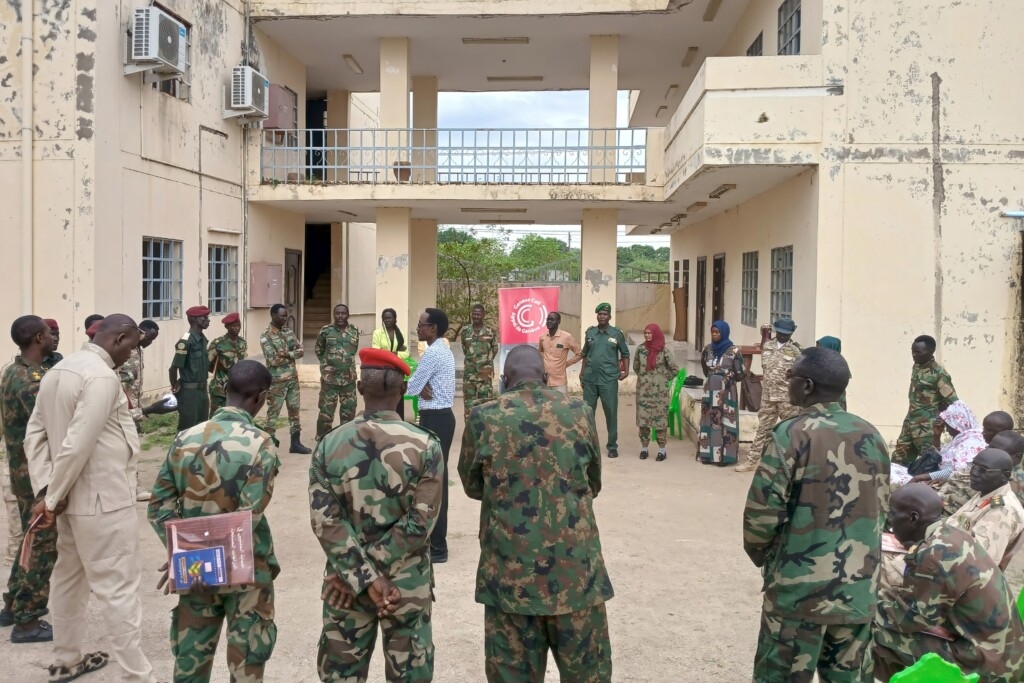
A central thread of Geneva Call’s work in 2025 was translating humanitarian norms and principles into practical, operational realities. This included delivering training, supporting armed actors to integrate humanitarian norms into their internal systems, and monitoring compliance over time.
In times when a global consensus on humanitarian principles is under strain, Geneva Call’s approach emphasises local relevance and ownership. By connecting international humanitarian norms with religious, cultural, and traditional norms, the organisation helped reinforce the universality of civilian protection standards while making them more actionable on the ground.
Country-level impact: diverse contexts, shared purpose
The report highlights how this approach translated into tangible results across highly diverse conflict settings.
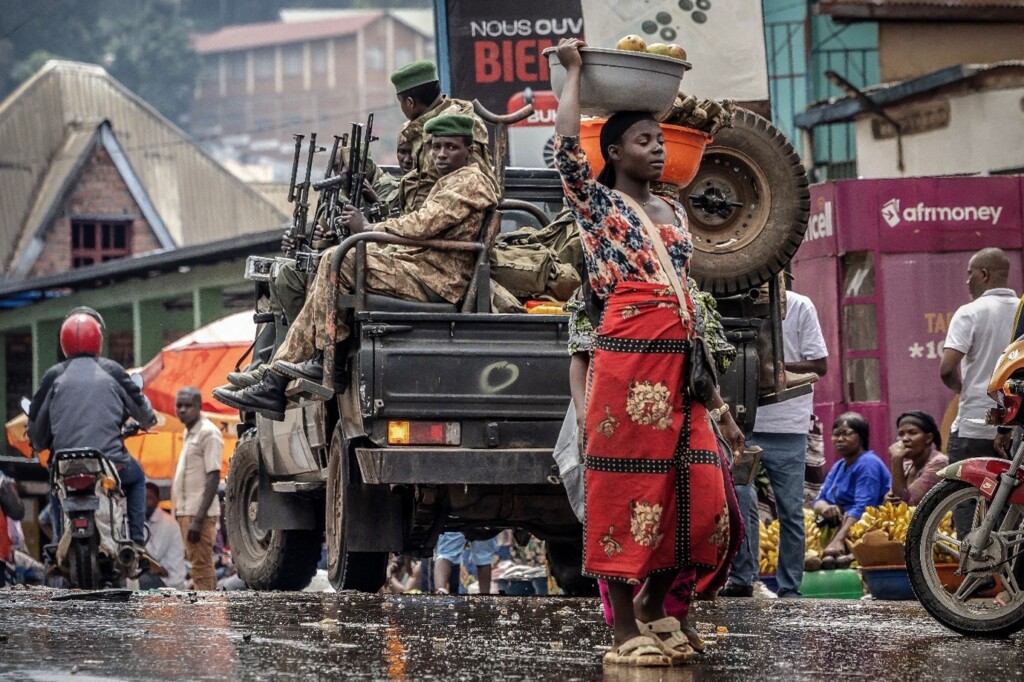
- In the Democratic Republic of the Congo, sustained humanitarian dialogue with armed groups resulted in concrete commitments, with four unilateral declarations signed by armed actors, reflecting commitments to adopt practices more consistent with IHL and the protection of civilians.
- In the Sahel, where humanitarian space continues to shrink, Geneva Call focused on engaging self-defence armed groups on child protection, education, and respect for the principle of distinction between civilians and combatants, as well as its implications for social cohesion.
- In Sudan, amid one of the world’s most severe humanitarian crises, Geneva Call engaged seven AGDAs through high-level meetings, structured dialogue, and IHL/IHRL trainings, reaching 450 officers, including 150 women.
- In Myanmar, interventions focused on the operational application of IHL, including civilian protection, SGBV prevention, detention practices, child protection, and humanitarian access. An external evaluation found measurable improvements in knowledge and behaviour, with evidence of changes in practice.
- In Colombia, where direct engagement with armed actors remains limited, the organisation strengthened community protection capacity, contributing to more informed and timely responses to protection threats at community level.
Across contexts, these efforts underscore a key insight: protecting civilians is not only about norms, but about behaviour change — built over time through trust, dialogue, and accountability.
Marking 25 years of protecting civilians
2025 also coincided with a milestone: 25 years of Geneva Call’s humanitarian engagement.
From its initial focus on banning anti-personnel mines to its current work addressing a broad range of protection issues, the organisation has evolved alongside changing conflict dynamics. Today, it engages with a wide spectrum of armed actors — recognising their critical role in shaping civilian protection outcomes in areas beyond state control.
Over this period, one message has remained constant, however: change is possible, even in the most difficult environments, and IHL is a concrete, operational framework which effectively protects civilians.
Looking ahead
As conflicts become increasingly complex, and respect for humanitarian norms continues to be challenged, the need for sustained engagement with all parties to conflict has never been greater.
The 2025 Annual Report reaffirms Geneva Call’s core conviction: that dialogue, grounded in humanitarian principles and adapted to local realities, can lead to meaningful improvements in the protection of civilians.
In a fragmented world, preserving humanity on all fronts is not only a moral imperative — it is a practical necessity.
Geneva Call Annual Report 2025
Audited Financial Statement 2025