Behavioural change in action: An armed group based in Wau Shilluk, South Sudan, embraces civilian protection
Geneva Call leverages the transformative power of education to protect communities living under the influence of an armed group in South Sudan’s Upper Nile state.
Located in Upper Nile state, Wau Shilluk is in an area of South Sudan which has suffered from killings, injuries, displacement, and abductions due to ongoing tensions and fighting. Over the last three years, weapons bearers, including government forces, armed groups and de facto authorities (AGDAs) have operated throughout the state, with severe effects on the lives of local communities.
For nearly two years, the situation has been further exacerbated by the war that broke out in Sudan in April 2023. Renk, located north of Upper Nile state, has become a key transit point for South Sudanese returnees from Sudan, as well as Sudanese refugees fleeing the conflict. Malakal, a county within Upper Nile state, has also served as a transit hub, notably through its Bulukat Transit Center. Nearly half of the returnees and refugees are children.
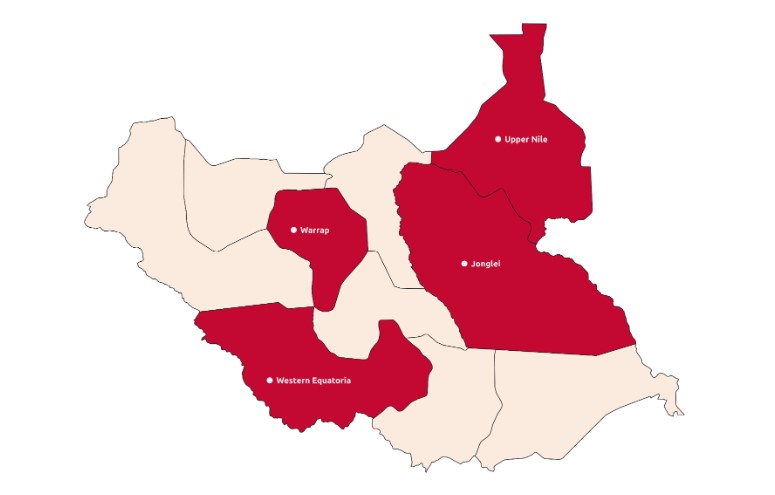
It is against this backdrop, and since 2023, that Geneva Call has actively engaged with an armed group, community and religious leaders, and civil society actors in Wau Shilluk, along the White Nile river. The armed group settled in Wau Shilluk following an upsurge of violence in December 2022. Geneva Call’s approach has been to sustain a constructive process of interaction to enhance their adherence to international humanitarian law (IHL) and humanitarian norms, with the primary goal of protecting local communities.
“We first started working with one of the armed groups based in Wau Shilluk, at the end of 2023. Their proximity with civilians, and the fact that they were a key armed actor in the area, made their engagement particularly relevant,” said IHL/IHRL Legal Advisor Camille Jacquot. “Most education activities with this group were held in an open-air setting, basically under a tree, which has its challenges. Yet, the group proved eager and committed, which permitted us to foster crucial discussion around protection issues impacting civilians. Indeed, training and educational activities alone, are not the main goal for Geneva Call. We use them as a tool to trigger dialogue, and eventually foster behavioural change.”
“The group proved eager and committed, which permitted us to foster crucial discussion around protection issues impacting civilians.”
Training and engagement
Over time, conversations with the armed group fostered mutual trust and led to the implementation of a training program. In September 2023, Geneva Call began training senior officers of the armed group on IHL. This later led to an agreement for similar activities to be conducted at the field level in Wau Shilluk in October 2023. Geneva Call also identified participants for Training of Trainers courses, which were conducted in December 2023.
Impact assessment
Months passed and in July 2024, Geneva Call’s South Sudan field office organized an impact assessment to evaluate how the activities in Wau Shilluk had contributed to fostering a more protective environment for local communities.
“Monitoring and evaluation of our activities is of the utmost importance to Geneva Call. It enables us to measure the progress made or the challenges remaining. That is precisely what we strived for with the impact assessment exercise conducted in Wau Shilluk. This exercise will allow us to guide future activities in the area. We particularly valued the feedback and recommendations provided by the communities,” said South Sudan Country Director Ranjan Poudyal.
“Monitoring and evaluation of our activities is of the utmost importance to Geneva Call.”
The assessment, which included interviews with members of the armed group, Civil Society Organizations (CSOs), and community consultations, revealed how the armed group had taken notable strides in their understanding of IHL, including Geneva Call’s “15 rules of behavior for combatants”, and the IHL principle of distinction, which emphasizes the importance of distinguishing at all times between military objectives and civilians, as well as civilian objects.
The assessment also highlighted concrete actions by the armed group that demonstrated how its behavior had aligned with training on international humanitarian norms and principles.
Relocation of military barracks and increased humanitarian access
When the armed group established a presence in central Wau Shilluk in December 2022, they located their barracks at the heart of the community. This situation remained unchanged in 2023, but during Geneva Call’s mission assessment process, it was observed that the barracks had been relocated to the outskirts of the area, a move which was welcomed by the population. The relocation allowed for improved humanitarian access, as the area was no longer perceived as a military zone, a key consideration given the increasing number of returnees arriving in the area from Sudan. Members of the armed group said that the relocation had been triggered by Geneva Call’s IHL trainings.
The perception is now that the area is stable and safe and that civilians can cultivate and conduct small businesses to support themselves and their families. The appointment of a Relief and Rehabilitation Commission (RRC) focal person, which was supported by the armed group, has also helped to improve coordination between humanitarian actors and government bodies.
“These outcomes are very encouraging. Humanitarian access is a core area for Geneva Call. During our education and training with the armed group, we debated formal and informal impediments to humanitarian access, as well as their perception of humanitarian activities. It is uplifting to see these changes take place. They can foster a more conducive environment in which the humanitarian needs of the population will hopefully be met,” said IHL/IHRL Legal Advisor Camille Jacquot.
“It is uplifting to see these changes take place.”
A safe environment for education
In the spring of 2024, a further breakthrough occurred when one of the warring parties in the region vacated a school they had occupied since December 2022. The armed group which Geneva Call worked with in Wau Shilluk contributed to restoring the school as a safe environment for education. They joined advocacy efforts undertaken by other stakeholders, including the local authorities, for the school ground to be cleared of a military presence.
The occupation of the school had curtailed children’s rights to education. With the school now cleared, classes resumed, allowing children – including those from returning families – to attend school once again.
The importance of child protection was a key focus in Geneva Call’s training sessions, which emphasized the detrimental effects of military occupation on educational institutions.
Restraint in the use of force
Another event also helped to demonstrate how the armed group in Wau Shilluk was able to distinguish between situations that are part of the conduct of hostilities, governed by IHL, and those linked to the maintenance of security and order, governed by the law enforcement paradigm.
In June 2024, following a tragic incident involving the deaths of three pastoralists, the armed group’s leadership swiftly established a security committee to investigate and prevent further escalation of violence. The committee demonstrated their ability to enforce law by their cautious use of force during the arrest of the suspects, and their subsequent transfer to local authorities. Their approach highlighted the commitment of the armed group to respect the suspects’ physical integrity and not proceed to any mistreatment, even amidst the complexities of tribal affiliations and potential biases.
A calmer security landscape
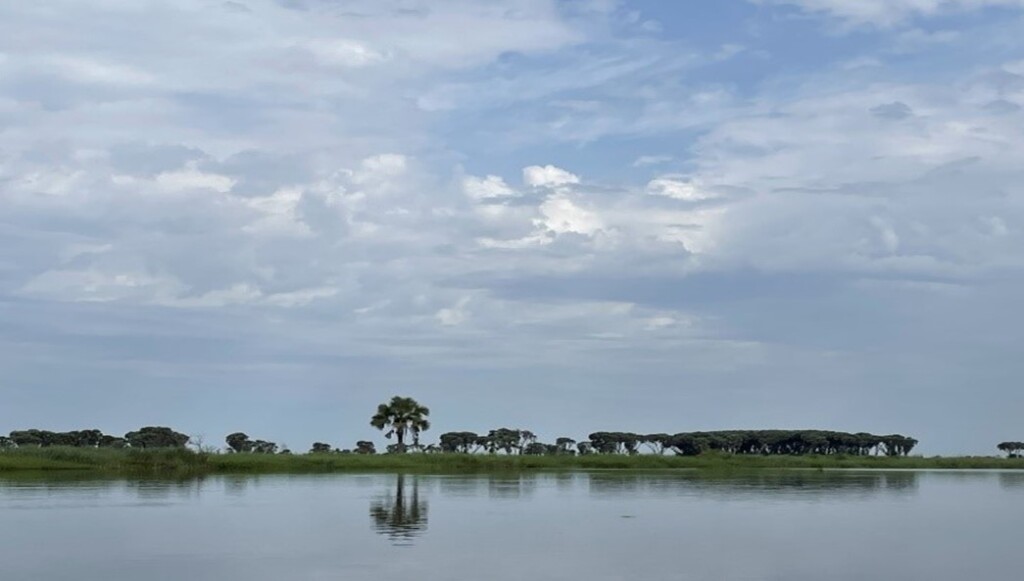
Throughout 2024, the security situation in Wau Shilluk has remained stable. With no reported violence since the arrival of the armed group, the community has begun to experience a sense of normalcy. It is also clear from the interviews and consultations carried out that the repeated engagements Geneva Call has had with the armed group in Wau Shilluk have led them to take very concrete actions to enhance the protection of civilians, including in terms of child protection and internal discipline.
“We truly hope that the situation will continue to improve as the Republic of South Sudan transitions from conflict to a more peaceful society,” added South Sudan Country Director Ranjan Poudyal. “We aspire for these changes both at the local level, such as Wau Shilluk, as well as the national level.”
“We truly hope that the situation will continue to improve as the Republic of South Sudan transitions from conflict to a more peaceful society.”
Continuing humanitarian engagement
While the progress made in Wau Shilluk is substantial, humanitarian needs remain very high and ongoing engagement is essential. Geneva Call will continue to facilitate positive change as the community looks toward a future of healing and increased stability.
Visit our page on South Sudan to read more about Geneva Call’s activities in the country.